You planted hostas. The slugs held a banquet. You wake up to leaves that look like green lace doilies, a silvery slime trail leading away from the crime scene, and a growing suspicion that the slugs are laughing at you. Midwestern gardeners know this war intimately — the region’s humid summers and rich soils create slug paradise. But before reaching for chemical slug pellets (toxic to pets, wildlife, and everything you actually want in your garden), know this: natural slug control works, and it’s often more effective long-term. This is the beginner-safe guide to stopping slugs from eating your plants naturally in the Midwest.
You’ll learn why slugs love your garden (and which plants they target), the natural defenses ranked by effectiveness, how to build a garden ecosystem that controls slugs for you, what to do during peak slug season, and the “natural” methods that are actually myths.
Know Your Enemy: Slug Behavior Basics
Slugs are nocturnal — they feed at night and hide in cool, damp darkness by day (under mulch, boards, dense ground cover, pots). They’re most active in wet weather and after rain, which is why Midwest springs and humid summers bring the worst damage. A single slug can eat several times its body weight nightly, and they detect food by smell from surprising distances.
Their favorites read like a gardener’s pride list: hostas, lettuce, basil, strawberries, marigolds, dahlias, and tender seedlings of almost anything. Less appealing: ferns, lavender, rosemary, ornamental grasses, and plants with hairy or tough leaves. This isn’t random — slugs prefer soft, succulent tissue they can rasp easily. Planning with this in mind (see companion strategies below) reduces damage before it starts.
Understanding their hiding behavior is the key to every control method: you don’t hunt slugs in your garden at noon — you eliminate their daytime shelters, trap them where they hide, and let predators handle the rest. The Old Farmer’s Almanac pest guides confirm what experienced gardeners know: habitat management beats product application for slugs. University extension services like the University of Minnesota Extension’s slug management guide confirm these behavior patterns.
Natural Defenses, Ranked by Effectiveness
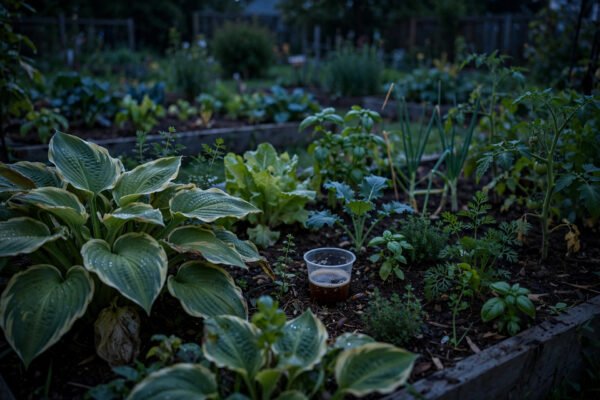
1. Beer traps (highly effective, slightly gross). Bury a cup or jar so the rim is at soil level, fill halfway with cheap beer. Slugs crawl in, can’t crawl out. Empty and refill every few days. Place traps near (not among) vulnerable plants — you want to intercept slugs en route. Yes, it really works; the yeast volatiles are irresistible to them.
2. Copper barriers (effective for containers and beds). Copper tape around pots and raised beds delivers a mild electric shock on contact (the reaction between copper and slug slime). It must be wide enough (2+ inches) and kept clean — dirty copper doesn’t work. Best for protecting specific high-value plantings rather than whole gardens.
3. Diatomaceous earth (effective when dry). Food-grade DE’s microscopic sharp edges damage slugs’ soft bodies. The catch: it’s useless when wet, which in the Midwest means reapplying after every rain. Best used as a ring around individual plants during dry spells, not as a garden-wide strategy.
4. Hand-picking at night (surprisingly effective). Go out with a flashlight 2 hours after dark, especially after rain. Pick slugs into soapy water. Fifteen minutes nightly for a week dramatically reduces the breeding population — and it’s free, chemical-free, and weirdly satisfying.
5. Iron phosphate bait (effective and safe). Products containing iron phosphate (sold as Sluggo and similar) are OMRI-listed organic, safe around pets, wildlife, and edible plants. Slugs eat it, stop feeding, and die within days. This is the “nuclear option” that’s still natural — use it when other methods aren’t enough.
For building overall garden resilience, choosing the right plants for beginners — including slug-resistant varieties — prevents problems at the design stage.
Build a Garden That Fights Slugs for You
The long game is ecological: make your garden inhospitable to slugs and welcoming to their predators. Reduce daytime shelter: Pull mulch back 3–4 inches from plant stems, avoid dense ground cover near vulnerable plants, elevate pots on feet, and clear boards, debris, and dense weed patches where slugs hide. A tidy garden isn’t just aesthetic — it’s slug warfare.
Water wisely: Water in the morning, not the evening. Evening watering creates the damp nighttime conditions slugs love; morning watering lets surfaces dry by nightfall. Drip irrigation or soaker hoses (watering soil, not foliage) reduce surface moisture further.
Recruit predators: Ground beetles, toads, birds, and hedgehogs (where present) all eat slugs. A small pond or even a buried bucket attracts toads — a single toad eats thousands of slugs per season. Bird-friendly plantings and water sources bring in slug-eating birds. Avoid broad-spectrum pesticides that kill these allies; you’re building an army, not fighting alone.
Plant strategically: Surround vulnerable plants with slug-deterrent companions — lavender, rosemary, sage, and ferns create aromatic or textural barriers. Use sacrificial plantings: a patch of cheap lettuce away from your prized hostas draws slugs to an acceptable target. And choose resistant varieties — thick-leaved hostas (like ‘Blue Angel’ types) suffer far less damage than thin-leaved ones.
Peak Season Battle Plan (Spring in the Midwest)
Midwest slug season peaks in wet springs (April–June) when seedlings are most vulnerable. Your battle plan: Before planting: Clear shelter, set beer traps, apply iron phosphate bait around bed perimeters. At planting: Use copper collars around transplants, water mornings only, mulch lightly and away from stems. First month: Night patrol twice weekly, refresh traps, monitor for damage. Ongoing: Maintain predator habitat, reapply DE after rains during dry spells, and accept minor damage — a garden with zero slug nibbles isn’t a natural garden.
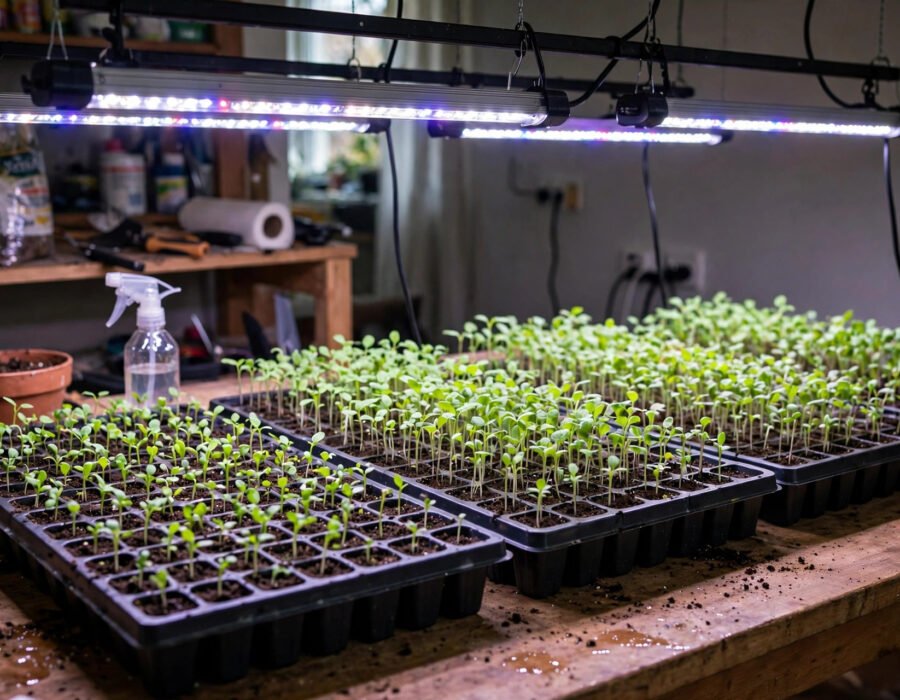
Protect seedlings especially: a cutworm collar (cardboard or plastic ring around each transplant) blocks slugs physically during the vulnerable establishment weeks. Seedlings started indoors and transplanted at sturdy size survive slug pressure far better than direct-sown seeds — another reason starting plants indoors pays off beyond the growing season extension.
Myths to Ignore
Eggshells: The theory (sharp edges deter slugs) fails in practice — slugs glide over crushed eggshells without difficulty. Studies and gardener trials consistently debunk this. Coffee grounds: Mildly deterrent at best, and large quantities harm soil pH and earthworms. Salt: Kills slugs, yes — and sterilizes your soil, killing everything else too. Never salt your garden. “Just get ducks”: Ducks do eat slugs enthusiastically — and also trample seedlings, eat lettuce, and require housing, water, and care. They’re a lifestyle, not a pest control product.
Frequently Asked Questions
What kills slugs naturally the fastest?
Iron phosphate bait works within days and is safe for pets, wildlife, and food gardens. For immediate results, nighttime hand-picking removes the most slugs per hour of any method.
Are slug pellets safe for dogs?
Traditional metaldehyde pellets are highly toxic to dogs and wildlife — avoid them entirely. Iron phosphate baits are the pet-safe alternative; always check the active ingredient, not just the “pet-friendly” marketing.
Why do I have so many slugs in the Midwest?
Humid summers, rich organic soils, abundant ground cover, and frequent rain create ideal slug habitat. It’s environmental, not personal — management, not eradication, is the realistic goal.
Do slugs serve any purpose in the garden?
Yes — they decompose decaying organic matter and are food for beneficial predators. The goal is population management, not extinction. A balanced garden always has some slugs; problems start when their numbers explode unchecked.
The Bottom Line
Stopping slugs naturally in the Midwest means: trap them (beer traps, night patrols), block them (copper, collars, iron phosphate bait when needed), starve them of shelter (morning watering, pulled-back mulch, cleared debris), and outsource to predators (toads, beetles, birds). Skip the eggshells and salt; invest in habitat management. You’ll never achieve zero slugs — but you can absolutely achieve hostas that survive the summer, and that’s the real victory.