
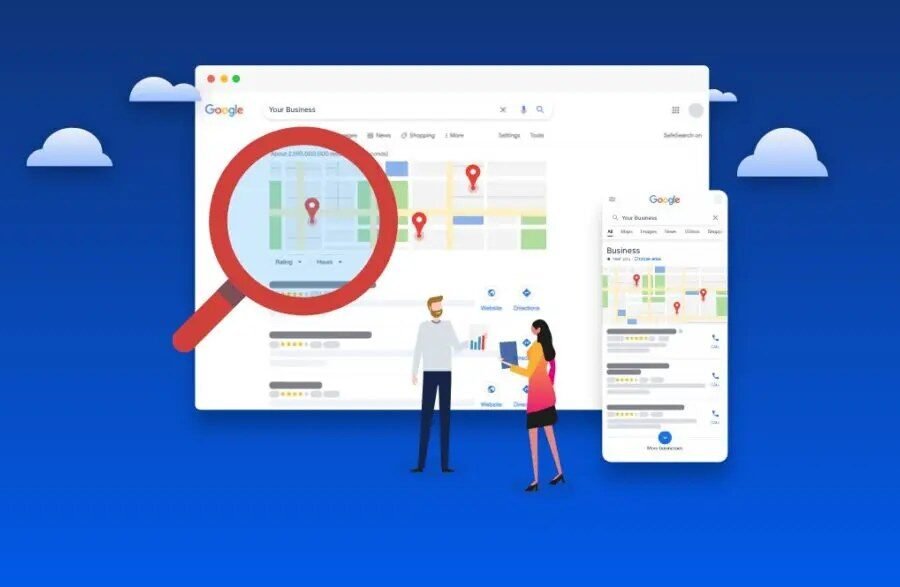
Search your business name on Google and… nothing? The usual causes: no Google Business Profile, a brand-new website Google hasn’t indexed, or inconsistent business info across the web. Here’s the fix checklist in priority order.
Why Is My Small Business Not Showing Up on Google?
Check the basics first: Google your exact business name in quotes — if nothing appears, you likely have an indexing problem (Google doesn’t know you exist). If you appear on page 5, it’s a ranking problem (Google knows you but doesn’t trust you yet). For local businesses: if competitors appear in the map pack and you don’t, it’s almost certainly a Google Business Profile problem — the map pack is where 70% of local clicks go.
Fix 1: Google Business Profile (Do This Today)
- Go to google.com/business and claim/create your profile — free, 20 minutes.
- Complete every field: hours, categories (primary + secondaries), services, description with keywords, photos (10+ — businesses with photos get 42% more direction requests).
- Verify — usually via postcard (5–7 days) or video verification. Unverified profiles barely rank.
- Get reviews: ask every happy customer — respond to all of them. Review count and recency are top local ranking factors.
- Post weekly: Google Posts (offers, updates, events) signal an active business.
Fix 2: Website Indexing
Is Google indexing you? Search site:yourwebsite.com — if no results, you’re not indexed. Fixes: submit your sitemap in Google Search Console (free, essential), check you’re not blocking crawlers (WordPress: Settings → Reading → uncheck “Discourage search engines”), and get a few real links (supplier listings, chamber of commerce, local directories). New sites take 2–8 weeks for meaningful indexing — patience is part of the process. If you don’t have a site yet, our website cost guide gets you started.
Fix 3: NAP Consistency
NAP = Name, Address, Phone — it must be identical everywhere: your website, Google profile, Yelp, Facebook, directories. “St.” vs “Street” mismatches confuse Google’s trust signals. Audit: search your business name + phone number and fix every inconsistent listing. Tools like Moz Local ($14/month) automate this across 50+ directories. Boring? Yes. Effective? Enormously — NAP cleanup is the highest-ROI local SEO task.
The Review Velocity Secret
Here’s what separates map-pack winners from the invisible: review velocity — a steady stream of new reviews, not a pile of old ones. Google’s algorithm heavily weights recency: 50 reviews from 2023 lose to 20 reviews with 5 from last month. The system: ask every customer, every time — a QR code at checkout linking to your review page, a follow-up text/email 24 hours after service (“Thanks for choosing us! A quick review helps a small business enormously”), and respond within 48 hours to every review (responses double as fresh content). Never buy reviews — Google detects patterns and suspends profiles; one suspension erases years of work. Handle bad reviews publicly and gracefully — a thoughtful response to a 2-star review impresses future customers more than ten 5-stars. Aim for 2–5 new reviews monthly minimum; that’s the velocity that moves the map-pack needle. Pair this with social media for local businesses — social signals and reviews compound.
Google Business Profile Posts: The Underused Weapon
GBP Posts are free mini-ads on your listing — and almost nobody uses them consistently. What to post: weekly offers (“20% off this week”), events, new products, seasonal updates — with a photo and a call-to-action button. Why it matters: active profiles rank higher (Google rewards engagement), posts appear directly in search results (free visibility), and they convert browsers into callers. The 10-minute weekly routine: one photo + two sentences + CTA button — scheduled via the GBP app. What works best: offers with deadlines (urgency converts), behind-the-scenes (humanizes), and event announcements (drives foot traffic). What doesn’t: generic “we’re open!” posts (noise). Track: GBP Insights shows post views and actions — double down on what converts. A year of weekly posts = 52 free advertisements on the world’s most valuable local real estate.
Citations and Directories: The Boring Foundation
Citations (your NAP on other sites) are local SEO’s foundation: Priority directories: Yelp, Facebook, Apple Maps, Bing Places, Yellow Pages, BBB, Angi (for services), TripAdvisor (for hospitality). The standard: identical NAP everywhere — “St.” vs “Street” matters (see the NAP section). Tools: Moz Local ($14/month), BrightLocal ($29/month), or Yext — they push consistent listings to 50+ directories. Manual option: 2–3 hours claiming the top 15 — free, tedious, effective. What to avoid: spammy directory blasts (100+ low-quality directories hurt more than help), and inconsistent data (worse than no listing). The audit: search your phone number in quotes — every result should show identical info. Boring? Yes. But citations are the #3 local ranking factor — ignore them at your peril.
Handling Negative Reviews (The Make-or-Break Skill)
One unanswered 1-star review costs more than ten 5-stars earn: The response formula: acknowledge (“I understand your frustration”), take responsibility where fair (“We fell short on…”), take it offline (“Please call me at [number] so I can make this right”), and sign with your name. Never: argue publicly, blame the customer, or offer bribes for removal (against Google’s policies). Fake reviews: flag them in GBP (Google removes ~30% of flagged fakes — be patient, document evidence). The paradox: a thoughtful response to a bad review impresses future customers more than a page of 5-stars — it proves you’re real and accountable. Review velocity matters more than perfection: a 4.6 with 200 recent reviews beats a 5.0 with 12 old ones. Respond to every review within 48 hours — it’s the highest-ROI 5 minutes in local marketing.
Tracking Local Rankings (Free Methods)
Know where you stand: Manual checks: search your key terms in incognito mode (logged-out, location set to your city) — weekly, same terms. Google Business Profile Insights: free — shows search views, map views, and actions (calls, directions, website clicks). Search Console: free — impressions and clicks by query. What to track: map pack presence (top 3), not just organic rank — the map pack gets 70% of local clicks. Don’t obsess daily; local SEO moves monthly. Paid tools (BrightLocal, Whitespark — $30/month) track precisely when you’re ready. Start free; upgrade when the data drives decisions.
Google documents Business Profile best practices on their official support pages — including the verification process and the attributes that influence local ranking. When in doubt about a feature, their documentation is the source of truth.
Local SEO vs. Social Media: Where Should You Focus?
For local businesses, this isn’t close: local SEO (Google Business Profile + reviews) beats social media for customer acquisition in most cases. Why: search captures high-intent customers (‘plumber near me’ = ready to buy now), while social captures low-intent scrollers (might buy later). Intent beats attention for revenue.
The numbers bear it out: the Google map pack gets the majority of local search clicks, and ‘near me’ searches have grown enormously. A complete Business Profile with 50+ reviews generates steady inbound leads with zero ongoing ad spend. Social media, meanwhile, demands constant content creation for uncertain returns.
The right allocation for most local businesses: 70% local SEO fundamentals (profile, reviews, website, citations), 20% one social platform done well (for brand and community), 10% experimentation. Nail being found first; be liked second. Social supports SEO indirectly (branded searches, engagement signals) — it’s the assist, not the goal.
Frequently Asked Questions
How long does local SEO take to work?
Google Business Profile optimization: 2–4 weeks for initial movement. Competitive markets: 3–6 months of consistent reviews, posts, and citations. It’s compounding — slow start, accelerating returns. Anyone promising instant rankings is selling something.
Should I hire an SEO agency?
Usually not at first — local SEO basics (profile, reviews, NAP consistency, website) are DIY-able in a few weekends. Consider an agency ($500–$2,000/month) only when basics are maxed and you’re in a competitive market. Most cheap SEO services ($99/month) are worthless or harmful.
What are local citations?
Mentions of your business name, address, and phone on directories (Yelp, Yellow Pages, industry sites). Consistency across citations builds Google’s confidence in your business info. Tools like Moz Local ($129/year) manage them at scale.
Do Google Ads help local SEO?
Indirectly — ads don’t boost organic rankings, but they generate immediate visibility and branded searches while SEO builds. Many businesses run both: ads for now, SEO for later. Just don’t confuse ad traffic with SEO progress.
How do I get more Google reviews?
Ask every satisfied customer directly (in person beats email), send a follow-up text/email with the direct review link, and make it frictionless — every extra click loses reviewers. Never buy reviews or offer incentives for positive ones (against policy; can get your profile suspended).
Why do competitors with worse reviews outrank me?
Rankings weigh proximity, relevance, and prominence — not just rating. A closer competitor with complete profile info and more total reviews (even at 4.6 vs your 5.0) often wins. Check their categories, photos, posting frequency, and citation profile for gaps to close.
The bottom line
Claim and complete your Google Business Profile, verify indexing in Search Console, fix NAP consistency, and generate 2–5 reviews monthly. That’s 90% of local visibility. It takes 1–3 months to move the needle — local SEO is a flywheel, not a switch. Start today; your competitors started last year.




1 Comment