
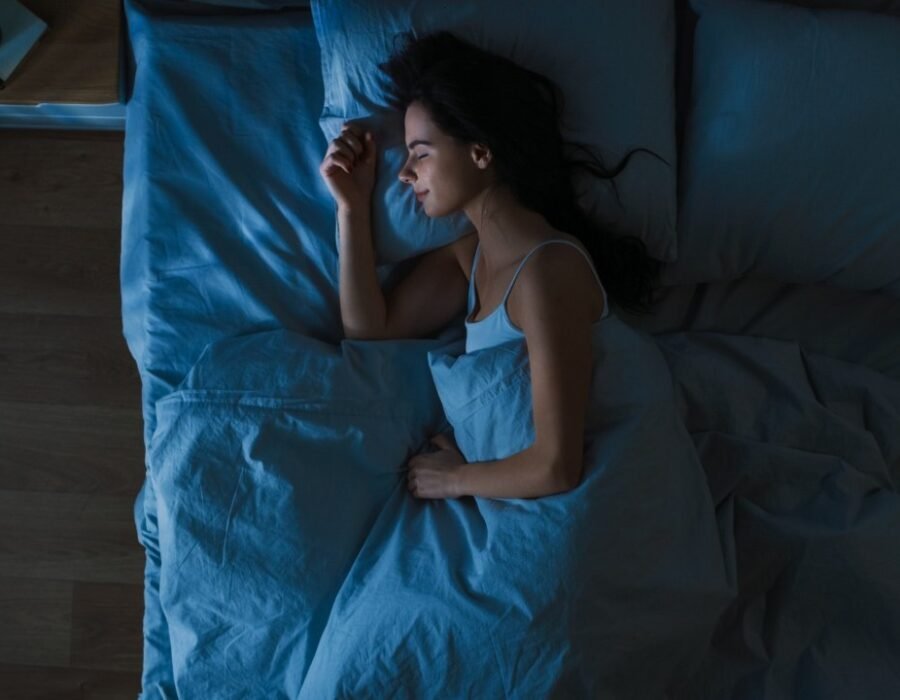
It’s 1:47am. You’ve been staring at the ceiling for two hours. Your mind is replaying an awkward conversation from 2019, planning tomorrow’s meeting, and composing grocery lists — everything except sleeping. You’ve tried counting sheep (useless), you’ve considered sleeping pills (worried about dependence), and you’re desperate. Here’s the good news: learning how to fall asleep faster without sleeping pills isn’t about one trick. It’s about understanding why your brain won’t shut off and systematically removing the barriers. The techniques below are evidence-based, drug-free, and they work — often starting tonight.
Let me be honest about the timeline: no technique works instantly for chronic insomnia, and anyone promising “fall asleep in 60 seconds guaranteed” is selling something. But most people see meaningful improvement within 1-2 weeks of consistent practice. Sleep is a skill your brain can relearn — it just needs the right conditions and a little retraining.
How to Fall Asleep Faster Without Sleeping Pills: Tonight’s Toolkit
The 4-7-8 breathing method. Inhale quietly through your nose for 4 counts, hold for 7, exhale slowly through your mouth for 8. Repeat 3-4 cycles. This isn’t mystical — extended exhales activate your parasympathetic nervous system (the “rest” branch), measurably slowing heart rate. It works best when practiced, not just attempted once in desperation. Try it now: you’ll feel the shift.
Cognitive shuffling. Pick a random letter, then think of objects starting with it — slowly, visualizing each one briefly before moving on (apple… anchor… airplane…). This occupies your brain’s image-processing with boring, random content — crowding out the anxious rumination keeping you awake. It sounds silly; sleep researchers find it surprisingly effective because it mimics the random imagery of pre-sleep brain states.
Progressive muscle relaxation. Starting from your toes, tense each muscle group for 5 seconds, then release completely. Work upward: calves, thighs, abdomen, hands, arms, shoulders, face. The contrast between tension and release teaches your body what relaxation actually feels like — most insomniacs don’t realize how much residual tension they’re holding.
The paradoxical intention. Instead of trying to fall asleep (which creates performance anxiety — the harder you try, the more awake you become), try to stay awake with your eyes open in the dark. This removes the pressure, and sleep often arrives precisely because you stopped chasing it. It’s the most counterintuitive technique here and one of the most effective for anxiety-driven insomnia.
Get up if you’re not asleep in 20-30 minutes. Lying awake trains your brain to associate bed with wakefulness — the opposite of what you want. Get up, go to another dimly-lit room, do something boring (not screens), and return when sleepy. This sleep restriction technique is a core component of CBT-I (cognitive behavioral therapy for insomnia), the gold-standard insomnia treatment.
The Daytime Habits That Determine Your Night
What you do at 1:47am matters less than what you did at 1:47pm:
- Consistent wake time. The single most powerful sleep habit — more important than bedtime. Same wake time daily (yes, weekends too) anchors your circadian rhythm. Your body learns when to feel sleepy; irregular schedules confuse it.
- Morning sunlight. 10-30 minutes of outdoor light within an hour of waking sets your circadian clock more effectively than any supplement. This is the highest-ROI sleep intervention that almost nobody does.
- Caffeine curfew. Caffeine’s half-life is 5-6 hours — that 2pm coffee is still 25% active at midnight. Set a personal cutoff (noon works for most) and watch your sleep latency improve.
- Exercise (but time it right). Regular exercise improves sleep quality dramatically — but intense workouts within 2-3 hours of bed can delay sleep for some people. Morning or afternoon exercise is ideal. Our exercise starter guide gets you moving safely.
- Wind-down routine. 30-60 minutes before bed: dim lights, no work email, something calming (reading, stretching, warm shower — the subsequent body temperature drop promotes sleepiness). Your brain needs a runway, not a cliff.
- Cool, dark, quiet bedroom. 65-68°F is the sleep sweet spot. Blackout curtains or a sleep mask. White noise if needed. Your bedroom should be a cave: cool, dark, quiet, used for sleep (and intimacy) only.
- Limit alcohol. Alcohol feels sedating but fragments sleep architecture — you fall asleep faster but wake more, getting less restorative deep sleep. The net effect is worse sleep, not better.
When to Get Professional Help
If you’ve tried behavioral approaches consistently for a month with little improvement, talk to your doctor. Persistent insomnia sometimes signals underlying issues — thyroid problems, depression, restless leg syndrome, medication side effects — that need addressing directly. And if snoring, gasping, or witnessed breathing pauses are part of the picture, ask specifically about sleep apnea testing. Treating apnea transforms not just sleep but daytime energy, blood pressure, and long-term health.
Ask your doctor about CBT-I specifically — it’s more effective long-term than sleeping pills, with no dependence risk, and it’s increasingly available via apps and telehealth. The Sleep Foundation provides excellent evidence-based resources on CBT-I and sleep disorders generally. Sleep problems are medical issues deserving medical attention, not character flaws to endure silently.
Our guide to persistent fatigue causes covers the daytime side — because poor sleep and daytime exhaustion are two halves of the same problem.
One more thing worth trying: if racing thoughts are your main barrier, keep a notepad by your bed. When worries or to-dos surface, write them down — externalizing them tells your brain it doesn’t need to keep rehearsing them. This “worry journal” technique is simple and research-supported: the act of writing transfers the mental load from your mind to the paper, freeing your brain to do its actual nighttime job. Combined with the breathing techniques above, it addresses both the mental and physical sides of sleeplessness.
The Bottom Line
To fall asleep faster without sleeping pills: use tonight’s toolkit (4-7-8 breathing, cognitive shuffling, progressive relaxation, paradoxical intention, and the 20-minute get-up rule), but invest mainly in daytime habits — consistent wake time, morning sunlight, caffeine curfew, regular exercise, a real wind-down routine, and a cool dark bedroom. Expect improvement in 1-2 weeks of consistency. If behavioral approaches don’t work after a month, see your doctor and ask about CBT-I and sleep apnea screening. Sleep isn’t a luxury or a talent — it’s a biological necessity your brain wants to do. Remove the barriers, keep the schedule, and let it happen. Tonight, start with the breathing: 4 counts in, 7 hold, 8 out. Your ceiling-staring days are numbered.

1 Comment