
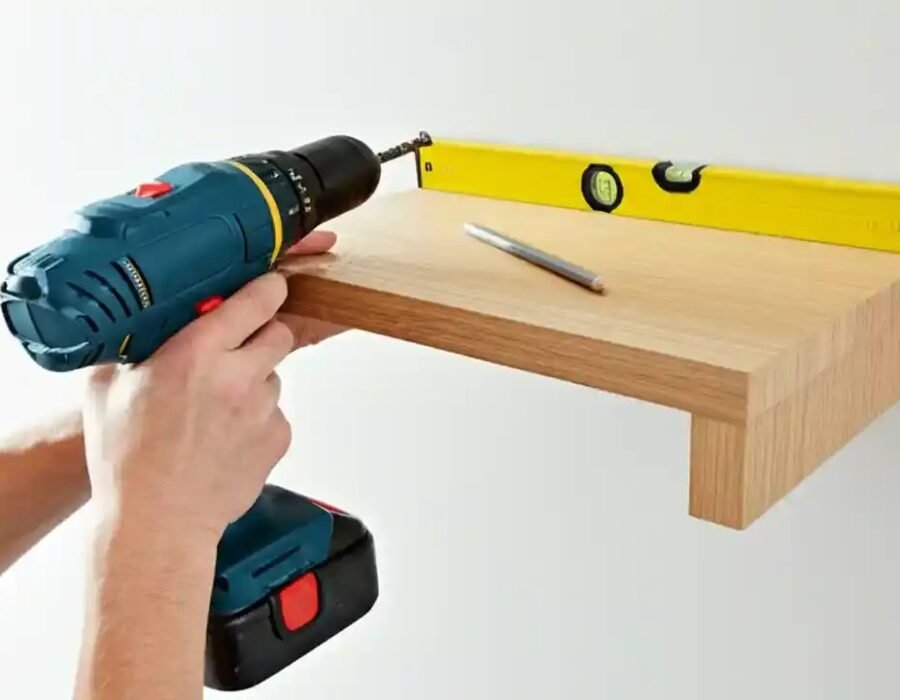
The question how do I hang heavy shelves on drywall safely is one where getting it wrong has real consequences — I’ve seen a fully-loaded bookshelf rip out of a wall, and it’s not just the drywall that suffers. The good news: hanging heavy shelves on drywall is completely safe if you understand the physics and use the right anchors. Here’s the complete guide, from finding studs to choosing anchors to the mistakes that cause failures.
Core principle: drywall itself holds almost nothing. A screw driven into bare drywall might hold 10 pounds before the gypsum crumbles. All the strength comes from either hitting the wooden/metal studs behind the drywall, or using anchors that distribute weight across a larger area. Every safe installation uses one of these two strategies.
How Do I Hang Heavy Shelves on Drywall Safely? Find the Studs First
Studs are always plan A. A single screw into a wood stud holds 80-100 pounds in shear (downward force). Two screws into two studs can hold a bookshelf. Here’s how to find them:
- Electronic stud finder: $25-40, worth owning. Slide slowly; mark both edges of each stud and aim for center. Calibrate on a known empty section first.
- The knock test: solid thunk = stud, hollow sound = cavity. Works but imprecise — use to confirm, not to locate.
- Magnet trick: a strong neodymium magnet finds the drywall screws/nails fastening the drywall to studs. Slide it along the wall; it’ll catch on each screw head. Free and surprisingly accurate.
- Measure from known points: studs are typically 16″ apart (center to center) in the US, sometimes 24″. Find one (electrical outlets are usually mounted on studs — check which side), then measure 16″ intervals.
- Look for visual cues: baseboard nail dimples, crown molding nails often align with studs.
Always drill a pilot hole to confirm the stud before committing. If the drill bit goes through easily then hits resistance, you’re in wood. If it punches through with no resistance, you’re in a cavity — stop and reassess. And always check for electrical/plumbing first: stud finders with AC detection ($35+) warn about live wires. Never drill blindly above outlets or below bathrooms.
When You Can’t Hit Studs: Anchor Guide
Sometimes shelf placement doesn’t align with studs. That’s fine — modern anchors are excellent. Ranked by holding power:
- Toggle bolts (snap toggles): the heavy-duty champion. A 1/4″ toggle bolt in 1/2″ drywall holds 100+ pounds in shear. The metal wing springs open behind the drywall, distributing load. Best for: heavy bookshelves, large mirrors. Downside: needs a 1/2″ hole (hard to patch if you move the shelf).
- Self-drilling metal anchors (like E-Z Ancor): hold 50-75 pounds each in drywall. Screw directly in with a drill — no pre-drilling. Best for: medium shelves, the workhorse anchor. My most-used anchor by far.
- Molly bolts: hold 50-100 pounds. The sleeve expands behind the drywall as you tighten. Excellent but fiddly to install; toggles are usually easier.
- Plastic expansion anchors: hold 15-30 pounds. Fine for light shelves, picture frames. NOT for heavy shelves — this is where failures happen.
- Adhesive strips: hold 5-15 pounds. Great for small items, completely inappropriate for shelves with real weight.
Rule of thumb: each anchor should be rated for at least 3x the weight it will actually carry. A 40-pound shelf of books needs anchors rated for 120+ pounds total. This safety margin accounts for dynamic loads (bumping the shelf, kids pulling on it).
The Installation Process, Step by Step
- Plan the load. Weigh or estimate: shelf + brackets + contents. Books are deceptively heavy (a 3-foot shelf of hardcovers = 60-80 lbs).
- Mark stud locations with painter’s tape. Plan bracket positions to hit at least one stud if possible.
- Level your marks. Use a real level (not a phone app) across the full shelf length. Mark bracket holes precisely.
- Drill pilot holes. For studs: bit slightly smaller than the screw. For anchors: the exact size the anchor specifies.
- Install anchors/brackets. Don’t overtighten — stripping the drywall around the anchor destroys its holding power.
- Mount the shelf, then load gradually. Add weight slowly and check for any flex or pull-away at the wall.
For floating shelves (no visible brackets), the hidden bracket bar MUST hit studs — no exceptions. Floating shelf failures are almost always from anchors instead of studs. If your floating shelf location has no studs, either move it or install a wooden cleat across two studs first, then mount the shelf to the cleat.
Bracket Types Matter
- L-brackets: simplest, strongest. Visible but honest. Size the bracket to 2/3 the shelf depth.
- Hidden floating brackets: sleek, but demand studs and precise leveling.
- Track/standard systems: vertical metal tracks with adjustable brackets. Excellent for heavy loads and flexibility — the track distributes weight across multiple studs.
- Corbels/decorative brackets: beautiful but verify the weight rating; many decorative brackets are weaker than they look.
Common Failures (Learn From Others’ Mistakes)
- Using plastic anchors for heavy loads. The #1 cause of shelf collapses. Plastic anchors are for pictures, not bookshelves.
- Overloading over time. The shelf held fine for a year, then you added “just a few more books.” Creep failure is real — drywall anchors loosen gradually.
- Ignoring shear vs. pull-out. Anchors are rated for downward shear. If the shelf sticks far out from the wall, it creates pull-out force (leverage) that ratings don’t cover. Deeper shelves need stronger mounting.
- Old/damaged drywall. Water-damaged or crumbling drywall holds nothing. If the drywall is soft, repair it first or mount to studs only.
- Metal studs. Commercial buildings and some homes have steel studs — standard wood screws don’t bite. Use self-tapping metal screws or toggles.
If you’re doing broader home updates, my guides to cheap kitchen updates and increasing home value cover the projects where shelving often comes up.
Learn more: see This Old House shelving guides for detailed tutorials and product recommendations.
The Bottom Line
How do I hang heavy shelves on drywall safely? Hit studs whenever possible (80-100 lbs per screw), use toggle bolts or self-drilling metal anchors when you can’t (never plastic anchors for real weight), rate every anchor for 3x the actual load, and always confirm what’s behind the drywall before drilling. Do it right and the shelf will outlast the paint. Do it wrong and you’ll be patching a very expensive hole. When in doubt, add one more bracket — overkill is underrated in shelving.


3 Comments