You crushed leg day yesterday — or survived your first boxing class, or finally tried that “beginner-friendly” HIIT video — and today your body is filing a formal complaint. Every stair is a negotiation. Sitting down requires strategy. And you’re wondering: should you do something to recover faster after intense workouts, or is the smart move to just wait it out? New York’s fitness culture pushes aggressive recovery (cryotherapy! compression boots! $40 smoothies!), but the science of recovery is both simpler and stranger than the marketing. This guide gives you the honest playbook.
You’ll learn what’s actually happening in your sore muscles, the recovery methods ranked by evidence, the overhyped industry to skip, nutrition and sleep protocols, and how to tell productive soreness from injury.
What’s Actually Happening (DOMS Explained)
Delayed-onset muscle soreness (DOMS) — the stiffness peaking 24–72 hours post-workout — comes primarily from microscopic muscle damage and the inflammatory response to it, especially from eccentric contractions (the lowering phase: descending stairs, lowering weights, downhill running). Here’s the counterintuitive part: DOMS is not a good measure of workout quality. You can have a superb training session with minimal soreness, and a mediocre one that leaves you wrecked. Chasing soreness as proof of progress is one of fitness’s most persistent myths.
More importantly: the damage-inflammation-repair cycle is the adaptation process. Muscle grows stronger during recovery, not during the workout — the workout is the stimulus, recovery is the response. Program both halves intelligently with AI-assisted workout planning that schedules recovery days. This means recovery isn’t passive downtime; it’s the other half of training. Athletes who train hard but recover poorly don’t just feel bad — they literally gain less from identical workouts than athletes who recover well. The American Council on Exercise emphasizes that recovery programming is as important as workout programming for long-term progress, and the American College of Sports Medicine’s position stands summarize the recovery evidence base.
Recovery Methods, Ranked by Evidence
Tier 1 — Proven, do these:
Sleep (the king): 7–9 hours. Growth hormone releases primarily during deep sleep; muscle protein synthesis peaks overnight; the nervous system resets. One bad night measurably impairs next-day performance and slows recovery. Nothing else on this list matters if sleep is broken. Non-negotiable.
Protein and calories (the building materials): 1.6–2.2g protein per kg bodyweight daily for active individuals, distributed across 3–5 meals (the body uses ~25–40g per meal efficiently). Post-workout, eat within a few hours — the “30-minute anabolic window” is overstated, but don’t train fasted and then skip eating. And eat enough — recovery in a caloric deficit is dramatically slower; dieting and hard training simultaneously is a recipe for perpetual soreness.
Active recovery (the accelerator): Light movement — easy walking, gentle cycling, mobility work — on sore days increases blood flow, delivering nutrients and clearing metabolic waste faster than complete rest. The key word is light: conversational pace, no strain. A 20-minute walk the day after leg day outperforms a day on the couch measurably.
Hydration (the overlooked): Dehydrated muscles recover slower and cramp more. Weigh yourself before/after intense sessions in heat — each pound lost is ~16oz of fluid to replace, plus electrolytes for sessions over an hour or heavy sweaters.
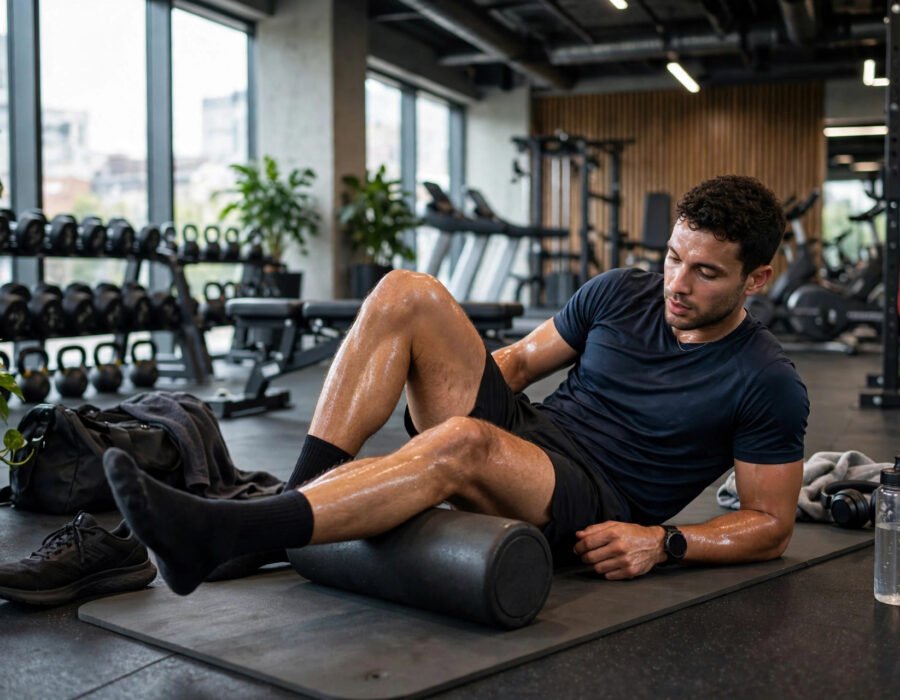
Tier 2 — Modest evidence, reasonable to try: Foam rolling/massage (reduces perceived soreness, minor performance benefits — the ritual and body awareness matter too), compression garments (small recovery benefits, mostly perceptual — wear them if you like them), cold water immersion (reduces soreness but may blunt long-term muscle adaptation — ironic: great for tournament athletes competing tomorrow, counterproductive for hypertrophy-focused trainers), tart cherry juice and omega-3s (mild anti-inflammatory effects in some studies).
Tier 3 — Save your money: Cryotherapy chambers ($50–$100/session — evidence is weak for the cost), compression boots/Normatec (feels amazing, evidence thin for the price), IV vitamin drips (your gut absorbs vitamins fine; the drip is theater), most “recovery” supplements (BCAAs are redundant if protein intake is adequate; glutamine, arginine — no meaningful evidence), and alkaline water (your kidneys regulate pH perfectly well).
The New York Recovery Reality
NYC’s fitness scene monetizes recovery aggressively — every boutique gym now sells add-on recovery services. The honest hierarchy for a New Yorker: free and effective (sleep, walking in the park, hydration, proper eating, foam roller at home — $25 one-time), worth paying for selectively (an occasional sports massage for persistent problem areas, $100–$150 — the human assessment matters as much as the massage), never worth it for most (cryo memberships, drip bars, $300/month recovery studios).
NYC-specific recovery advantages to exploit: walkable active recovery (a 20-minute walk to the subway is active recovery — count it), abundant affordable massage schools (student clinics offer quality work at fraction of spa prices), and park infrastructure (stretching in Central Park or along the Hudson beats a cramped apartment). The city’s walkability is a secret recovery weapon — use it deliberately on rest days.
Schedule reality: New Yorkers’ biggest recovery enemy isn’t lack of cryotherapy — it’s 5-hour sleep nights and skipped meals. Fix the Tier 1 fundamentals before considering any Tier 2/3 spending. Someone sleeping 8 hours and eating adequately recovers better than someone doing everything else while sleeping 5. For building the nutrition foundation, daily protein requirements gives you the precise targets.
Soreness vs. Injury: Knowing the Difference
Normal DOMS: Bilateral (both legs, both arms), dull/achy, peaks 24–72 hours, improves with gentle movement, no swelling or bruising, full strength returns within a week. Train around it (light sessions, different muscle groups) — don’t skip movement entirely.
See a professional: Sharp or stabbing pain, unilateral (one side only) pain, swelling or visible bruising, pain that worsens after 72 hours instead of improving, numbness/tingling, inability to bear weight, or any “pop” sensation during the workout. These signal strains, tears, or joint issues — not DOMS. Pushing through injury converts weeks of recovery into months.
The 10% rule for return: After any layoff from injury, return at ~50% of previous volume and rebuild 10% weekly. Impatience reinjures more athletes than the original mechanism did. And distinguish muscle soreness from joint pain always — muscles adapt and strengthen; joints warn and deteriorate. Sore muscles: trainable. Angry joints: restable.
Frequently Asked Questions
Should I work out when I’m still sore?
Yes, lightly — train different muscle groups, or do active recovery (walking, easy cycling, mobility). Avoid hammering the same sore muscles intensely until soreness substantially resolves. Movement heals; intensity re-damages.
Do ice baths actually help recovery?
They reduce perceived soreness short-term, but evidence suggests they may blunt the inflammatory signaling that drives long-term muscle adaptation. Use them before competitions (when tomorrow matters more than next month), skip them during muscle-building phases.
How much protein do I need for recovery?
1.6–2.2g per kg of bodyweight daily (0.7–1g per pound), spread across meals. A 180-pound active person needs roughly 130–180g daily. Whole foods first; powder to fill gaps.
Is it better to recover now or wait until later?
Start immediately — the recovery window isn’t a single moment but the 24–48 hours post-workout. Sleep tonight, protein today, light movement tomorrow. “Waiting until later” usually means the fundamentals never happen; front-load the basics.
The Bottom Line
Recovering faster after intense workouts comes down to Tier 1 fundamentals executed consistently: 7–9 hours of sleep, adequate protein and calories, light active recovery movement, and hydration — with foam rolling and massage as reasonable Tier 2 additions, and NYC’s recovery-industry upsells (cryo, drips, boot memberships) safely ignorable. Respect the soreness-injury distinction, return gradually from layoffs, and remember: you don’t get fitter from training. You get fitter from recovering from training. The workout is the question; recovery is the answer.