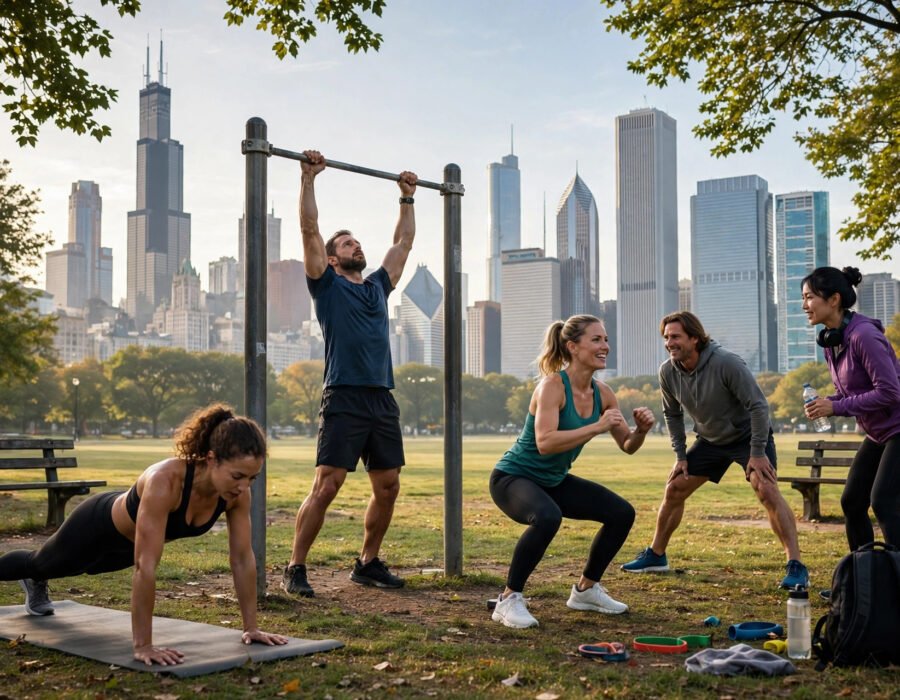
You want to work out outside. Fresh air, no membership fees, no waiting for equipment — just you and the city. So you search for outdoor workout spots in Chicago and find… a few paywalled articles, some vague park district pages, and the creeping suspicion that everyone else knows something you don’t. Finding free outdoor workout spots in Chicago is genuinely harder than it should be — not because they don’t exist (they do, abundantly), but because the information is fragmented across park districts, community groups, and word of mouth. This guide fixes that: why it’s hard, where the spots actually are, and how to use them.
You’ll learn why the search is frustrating, Chicago’s best free outdoor training locations by type, the seasonal reality (winter is coming, always), what to bring, and how to build a complete outdoor routine for $0.
Why It’s So Hard to Find Them
Four reasons. Fragmented ownership: Chicago’s outdoor fitness infrastructure is split among the Chicago Park District (580+ parks), the Forest Preserves of Cook County, the lakefront trail system, school tracks (varied public access), and university facilities — no single directory covers them all, and each publishes information differently. Start with the Chicago Park District’s park finder for your neighborhood. SEO failure: The best spots are hyperlocal knowledge shared in running clubs and neighborhood Facebook groups, not optimized web pages — Google can’t find what nobody published. Seasonal inconsistency: A spot that’s perfect in July may be unusable in January, and most listings don’t address seasonality — so even found information is half-wrong half the year. The “secret spot” effect: Regulars at the best outdoor gyms and calisthenics parks don’t advertise them widely (partly to avoid crowding), creating an insider-knowledge barrier for newcomers.
The workaround is social, not digital: join one Chicago running club, outdoor bootcamp meetup, or neighborhood fitness Facebook group, and you’ll learn in a week what Google couldn’t tell you in a month. The community is the directory. That said, this guide gives you the head start — the major spots, organized by training type, that anchor any Chicago outdoor routine.
The Spots, by Training Type
Running and cardio — The Lakefront Trail: 18.5 miles of separated paved trail from Ardmore to 71st Street — Chicago’s crown jewel for outdoor cardio. Free, always open, with water fountains, bathrooms, and skyline views. Best segments: the northern stretch ( quieter) for tempo runs, the Museum Campus stretch for people-watching easy runs. Winter: the city plows major sections, but ice demands traction devices — daily walking benefits apply year-round if you adapt the gear.
Bodyweight strength — Parcourse/fitness stations: Multiple parks have outdoor fitness equipment: pull-up bars, dip stations, and calisthenics structures. Notable: the workout stations along the lakefront (several clusters), Ping Tom Memorial Park (Chinatown — excellent calisthenics setup), and various park district “fitness courts.” The calisthenics community (check Instagram and Meetup for Chicago bar-athlete groups) knows every bar in the city — tap into it.
Stairs — Stadium and hill repeats: Chicago is famously flat, which makes its few hills precious: the hill at Montrose Point (the “magic hedge” area), Cricket Hill, and the sledding hills in various parks double as brutal stair/hill workout spots. For stadium stairs, local high school bleachers (off-hours, where permitted) are the classic free option.
Sports and skills — Park district fields and courts: Tennis courts (free at most parks, first-come), basketball courts (the city’s outdoor court culture is legendary — join a pickup game), soccer fields (open field space for drills and sprints), and the lakefront’s volleyball courts (Montrose and North Avenue beaches — nets up in season, open play common).
Yoga and mobility — The lakefront at sunrise: The stretch of lakefront near Promontory Point or the Alfred Caldwell Lily Pool area in Lincoln Park offers the city’s most serene outdoor practice settings. Free, beautiful, and the sunrise over the lake never gets old. Bring a mat you don’t mind getting sandy.
The Seasonal Reality: Chicago Winter
Let’s be honest: December through February, outdoor training in Chicago is an expedition, not a workout. But it’s doable with the right approach. Gear: Layered moisture-wicking base, insulating mid, windproof shell; thermal running tights; wool socks; gloves and head covering (30%+ of heat loss is cranial — the old stat is exaggerated but the principle holds); traction devices (Yaktrax or similar) for icy trails — non-negotiable for safety. Timing: Midday is warmest and brightest; the lakefront is windier and colder than inland (factor 10–15°F of wind chill difference). Modification: Shorten outdoor sessions, warm up indoors first, and have an indoor backup plan (bodyweight circuits at home) for sub-zero or dangerous-ice days. There’s no badge for frostbite. The CDC’s winter exercise safety tips cover hypothermia and frostbite warning signs.
The winter opportunity: Fewer crowds, stunning lakefront ice formations, and the psychological edge of training while others hibernate. Winter-consistent exercisers report the highest year-round adherence — if you can train through a Chicago February, you can train through anything. Just respect the real limits: below -10°F wind chill, or ice you can’t trust, train inside. For indoor programming, AI-generated home workout plans fill the winter gaps.
What to Bring (The Free-Outdoor Kit)
The beauty of outdoor training is minimal gear: water (more than you think — fountains freeze in winter and some are seasonal), a towel or mat (for ground work — a $15 yoga mat lives in your trunk), resistance bands ($25 set — turns any park into a full gym), your phone (safety, music, workout timer — but keep it secured), basic first aid awareness (outdoor training means no front desk — know where the nearest open facility is), and layers (Chicago weather changes mid-workout; the lakefront especially).
Safety: Train in populated areas during daylight when possible; tell someone your route for solo trail runs; carry ID; and know that park bathrooms and water fountains are seasonal (roughly April–October) — plan accordingly. These aren’t reasons to avoid outdoor training; they’re the 5-minute preparations that make it seamless.
Building the $0 Weekly Routine
Monday: Lakefront run or trail cardio (30–45 min). Tuesday: Calisthenics park session — pull-ups, dips, push-ups, squats, planks (use the fitness stations; bands supplement). Wednesday: Active recovery — walk the 606 Trail or lakefront (Chicago’s elevated trail is perfect for easy miles). Thursday: Hill/stair repeats (Montrose hill or stadium stairs — 20–30 min of intervals). Friday: Sports or skills — pickup basketball, tennis, soccer drills at the park. Weekend: Long cardio (lakefront trail long run/ride) + yoga/mobility at the lake.
Total cost: $0. Total equipment needed: bands and a mat. This routine matches or exceeds what most $60/month gym memberships deliver — with better views, fresher air, and zero commute to a crowded weight room. The only membership required is showing up.
Frequently Asked Questions
Are Chicago park district fitness facilities free?
Outdoor facilities (tracks, courts, fields, fitness stations, trails) are free and open to all. Indoor fieldhouses and pools may require affordable memberships — but the outdoor infrastructure alone supports complete training.
What’s the best free outdoor gym in Chicago?
The lakefront trail system overall (cardio + scattered fitness stations), Ping Tom Memorial Park for calisthenics, and the 606 Trail for running/walking. The “best” depends on your training type — this guide’s by-type breakdown covers each.
Can I work out outside in Chicago winter?
Yes, with proper gear (layers, traction devices) and judgment (midday timing, indoor backup for extreme days). Many Chicagoans train outdoors year-round — but respect sub-zero wind chills and ice; they’re genuine safety limits, not mental barriers.
Do I need a permit for outdoor group workouts?
Informal small groups generally don’t; organized commercial bootcamps in parks technically require park district permits. For personal training or friend groups, you’re fine — but check current Chicago Park District rules if running anything structured and paid.
The Bottom Line
Free outdoor workout spots in Chicago are abundant but badly indexed: the 18.5-mile lakefront trail for cardio, calisthenics parks like Ping Tom for strength, hills and stairs for intervals, park courts and fields for sports, and serene lakefront spots for yoga — all for $0, all year (with winter gear and judgment). Join one local fitness community to unlock the hyperlocal knowledge, build the weekly routine around these anchors, and let the city’s best gym — the one with the skyline views — be the one you never pay for.