You do not need a fossil museum to see evolution. It is in your kitchen, your medicine cabinet, and your own body — running right now, in real time. The bacteria in hospitals are evolving resistance to antibiotics as you read this. The flu virus reinvents itself every year, which is why last year’s vaccine does not fully protect you. If you want to understand how to understand evolution evidence in everyday life in the US, skip the textbook diagrams and look around: the proof is in the ordinary.
Evolution is simply change in inherited traits across generations, driven by variation, selection, and time. It is one of the most confirmed theories in science — supported by genetics, fossils, experiments, and direct observation — yet it remains abstract for many people because the timescales feel geological. The trick is noticing the fast-forward versions happening on human timescales. They are everywhere once you know where to look.
Your Dog Is an Evolution Experiment
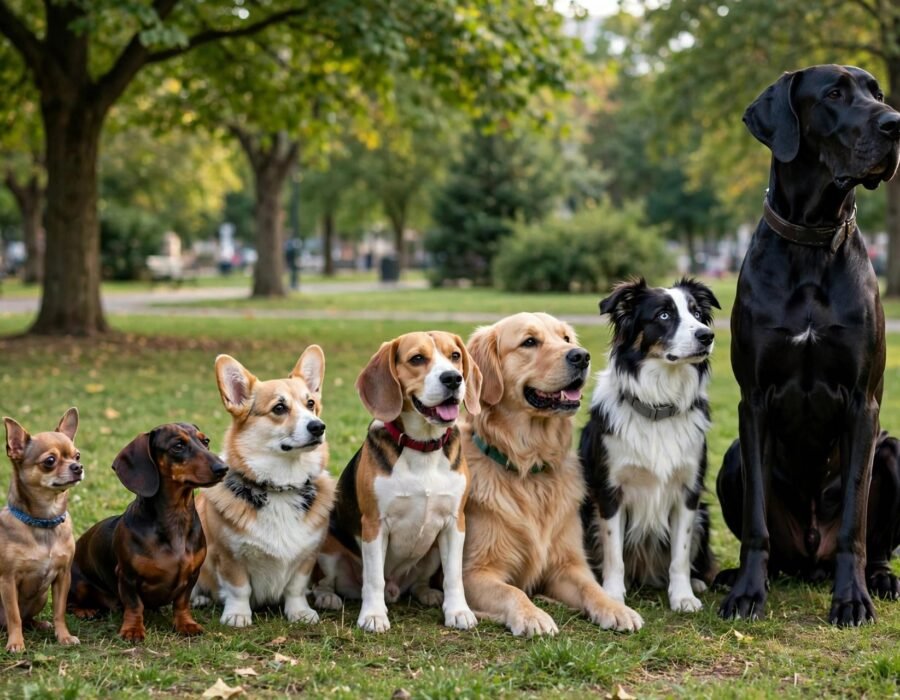
Every dog breed — from Chihuahua to Great Dane — descends from wolves, shaped by artificial selection in just a few thousand years. Humans chose which wolves bred, selecting for size, temperament, coat, and behavior, and the results are more morphologically diverse than any wild mammal family. If directed selection can do that in millennia, imagine what natural selection does in millions of years. Dog breeding is evolution with the fast-forward button held down, and it demolishes the “species can’t change” intuition.
The famous Russian fox experiment makes the point even sharper: researchers selected foxes solely for tameness, and within decades the foxes evolved floppy ears, mottled coats, and puppy-like behavior — traits nobody selected for directly. Selection on one trait drags others along because genes multitask. Smithsonian science resources document these domestication stories beautifully, and they are the most accessible proof that selection reshapes bodies fast.
Antibiotics, Pesticides, and Evolution in Real Time
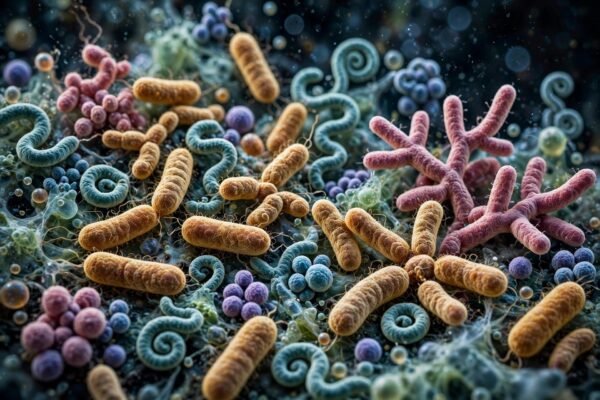
Hospitals are evolution laboratories. Every antibiotic dose kills susceptible bacteria and leaves resistant mutants — which is why MRSA and drug-resistant gonorrhea emerged within decades of the drugs meant to kill them. Farmers watch the same movie with pesticides: spray a field, kill 99% of insects, and the resistant 1% inherits the farm. Weed scientists document herbicide-resistant “superweeds” spreading across American farmland. These are not metaphors for evolution; they are evolution, observed, measured, and expensive.
The flu virus adds another dimension: it evolves so fast that vaccines must be reformulated annually, based on global surveillance of which strains are winning. COVID variants — Alpha, Delta, Omicron — were evolution in the headlines, each outcompeting its predecessors through natural selection for transmissibility. Anyone who followed the pandemic watched evolutionary dynamics play out in real time, with genomic sequencing as the scoreboard. It is hard to doubt a process you can track week by week on a dashboard. Public genomic databases let anyone watch variants rise and fall in near real time — evolution with a timestamp, free for anyone to browse.
Evolution Inside Your Own Body
Your body carries the receipts. Wisdom teeth crowd jaws that evolved smaller with cooking and agriculture. Goosebumps are a leftover from fur-raising ancestors. The appendix, once dismissed as useless, turns out to be a safe house for gut bacteria — evolution repurposing old hardware. And lactose tolerance in adults evolved independently in dairying populations within the last 10,000 years, one of the strongest recent selection signals in the human genome. You are not separate from evolution; you are its current draft. Even how AI is used in everyday life without you noticing follows a selection-like logic — systems evolving toward what works — though the mechanism is engineering, not biology.
The Fossil Record in Your Backyard
Fossils get dismissed as rare and disputable, but the record is now overwhelming: transitional forms like Tiktaalik (fish with wrist-like fins, exactly where evolution predicted), feathered dinosaurs, and the hominin sequence from Australopithecus to Homo sapiens. More powerfully, genetics independently confirms the fossil story. Human chromosome 2 is a fusion of two ape chromosomes, complete with vestigial centromere and telomere remnants — a molecular fossil readable in every cell of your body. Endogenous retroviruses — viral DNA inserted into genomes millions of years ago — appear in identical positions across related species, a shared-typo proof of common ancestry no fossil could match.
The National Science Foundation funds the fieldwork and genomics behind these discoveries, and the convergence is the point: fossils, DNA, embryology, and biogeography all tell the same story independently. When four independent lines of evidence agree, “just a theory” stops being a serious objection. Balancing work and personal life better may feel like its own evolutionary struggle, but at least your genome is not the obstacle.
The Experiment That Watched Evolution Happen
The most elegant proof comes from a lab flask. Since 1988, Richard Lenski’s E. coli experiment has grown bacteria through 75,000+ generations, freezing samples along the way — a fossil record you can revive. Around generation 31,500, one population evolved the ability to eat citrate, a brand-new trait requiring multiple mutations. Researchers could replay evolution from the frozen samples and watch it happen again — and crucially, the replay only worked from samples frozen after certain earlier mutations had accumulated, proving that the innovation depended on prior history. It is creation of novelty by mutation and selection, documented generation by generation, with the receipts in a freezer in Michigan. When anyone says evolution cannot create new traits, this experiment is the answer.
The Bottom Line
Evolution is not a distant abstraction — it is in dog breeds, drug-resistant bacteria, annual flu shots, and your own wisdom teeth. Artificial selection proves bodies can transform in millennia; natural selection, observed in hospitals and farms, proves it happens without direction; genetics provides the molecular receipts. You do not need to take anyone’s word for it. The evidence is in your kitchen, your pharmacy, and your DNA — running, as always, in real time.
Frequently Asked Questions
Has evolution ever been directly observed?
Yes, repeatedly. Bacteria evolving antibiotic resistance, insects evolving pesticide resistance, the flu evolving annually, and lab experiments like the decades-long E. coli study (which watched bacteria evolve entirely new traits) are direct observations. We also observe selection changing wild populations, like beak sizes in Galápagos finches shifting with droughts.
Why are there still monkeys if humans evolved from them?
Humans did not evolve from modern monkeys — both descend from a common ancestor that lived ~25 million years ago, the way cousins share grandparents. Modern monkeys are our evolutionary cousins, not our ancestors, and they are adapted to their own niches. Asking why monkeys still exist is like asking why your cousins exist if you descended from your grandparents.
How fast can evolution happen?
Much faster than intuition suggests. Bacteria evolve resistance in years, insects in decades, dog breeds transformed in millennia. The speed depends on generation time and selection strength — short-lived organisms under strong selection evolve visibly within a human lifetime.
What is the strongest single evidence for evolution?
Genetics. Shared endogenous retroviruses in identical genome positions across species, the fused human chromosome 2, and DNA sequence comparisons that independently reproduce the fossil-based tree of life — these are molecular facts that only common ancestry explains coherently.