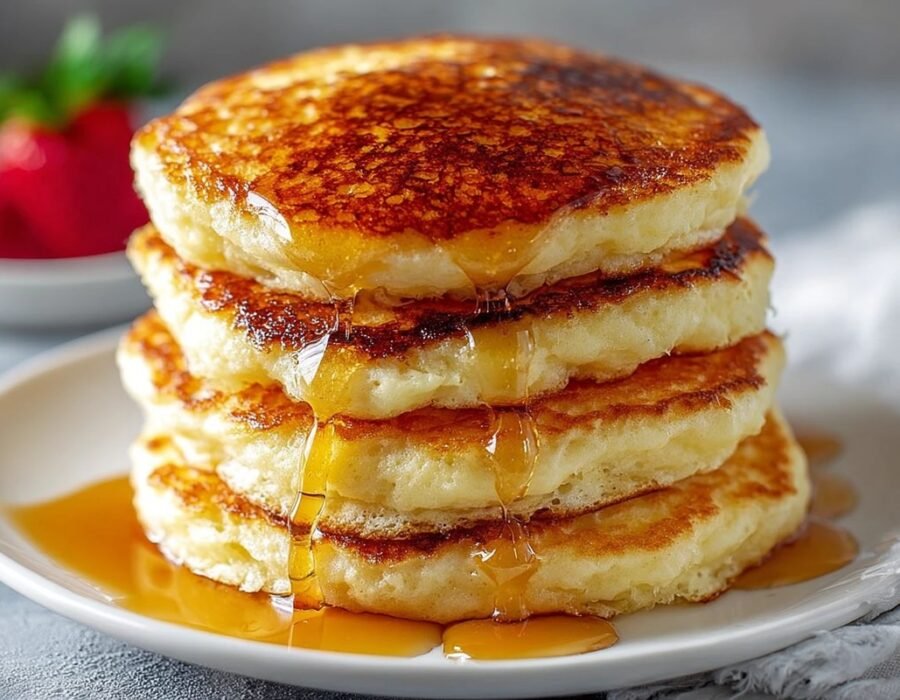
There’s a special disappointment in biting into a pancake that’s flat, dense, and rubbery when you were dreaming of a tall, fluffy stack. Learning how do I make fluffy pancakes from scratch transformed my weekend mornings — I went from box-mix devotee to from-scratch convert, and I’ve never looked back. The truth is that fluffy pancakes aren’t about a secret ingredient. They’re about understanding leavening, mixing, and heat, and avoiding the handful of mistakes that deflate everyone’s first attempts.
Let me be honest about my journey: my first from-scratch pancakes were worse than the box mix. Dense, pale, sad. But each failure taught me something, and now my pancakes are the thing friends request when they stay over. Here’s everything I learned, so you can skip the sad-pancake phase entirely.
How Do I Make Fluffy Pancakes From Scratch? The Science of Fluff
Fluffiness comes from two things: gas bubbles (from leavening) and the batter’s ability to trap them. Baking powder is your primary leavening — when it hits liquid and then heat, it releases carbon dioxide bubbles that puff the pancake up. Use 1 tablespoon of baking powder per cup of flour, and make sure it’s fresh. Test it like baking soda: drop a pinch in hot water, and it should fizz enthusiastically. Dead baking powder is the silent killer of fluffy pancakes, and it goes stale within 6–12 months of opening.
Buttermilk is the other half of the equation, and it’s the ingredient that separates good pancakes from great ones. Its acidity reacts with baking powder for extra lift, and it produces a tender crumb that regular milk can’t match. No buttermilk? Make a quick substitute: 1 cup of milk plus 1 tablespoon of white vinegar or lemon juice, left to sit for 5 minutes. It won’t be identical to real buttermilk, but it’s dramatically better than plain milk. I’ve done side-by-side tests, and the difference in fluff is visible.
Here’s my base recipe, scaled for about 8 medium pancakes: 1 cup all-purpose flour, 1 tablespoon baking powder, 1 tablespoon sugar, 1/2 teaspoon salt, 1 cup buttermilk, 1 large egg, 2 tablespoons melted butter, 1/2 teaspoon vanilla. That’s it. Simple, reliable, and better than any mix.
The Mixing Mistake Everyone Makes
If you take one thing from this article, let it be this: do not overmix the batter. I mean it. This is the number one pancake sin, and almost everyone commits it. Overmixing develops gluten — the protein network that makes bread chewy — and chewy is the opposite of fluffy. Your batter should be lumpy. Lumpy is good. Lumpy is correct. If your batter looks smooth like cake batter, you’ve gone too far.
The method: whisk all dry ingredients in one bowl, all wet in another. Pour wet into dry and stir with a fork or spatula just until the flour disappears — 10 to 12 strokes, max. Walk away. Let the batter rest for 5–10 minutes while your pan heats. This rest lets the flour hydrate and the baking powder start working, and it makes a noticeable difference in tenderness. I use the resting time to heat the pan and get toppings ready.
Resist the urge to stir again before scooping. Those lumps will cook out, I promise. Every extra stir knocks out air and develops more gluten. Scoop gently with a measuring cup or ladle, and don’t press or spread the batter in the pan — let it settle on its own for the fluffiest result.
Heat and timing: the flip
- Pan temperature: medium-low to medium. Too hot and the outside burns before the inside cooks; too cool and they won’t rise properly. Test with a drop of water — it should sizzle and dance, not explode.
- Fat: butter for flavor, but wipe the pan between batches — burnt butter residue makes pancakes bitter and spotty. I use a paper towel with a little butter for each batch.
- When to flip: wait for bubbles to form on the surface and the edges to look set, about 2–3 minutes. Flip once — just once. Every additional flip deflates the pancake.
- Second side: needs only 1–2 minutes. Don’t press down with the spatula (I know it’s tempting) — pressing squeezes out the air you worked to create.
- Keeping warm: hold finished pancakes in a 200°F oven on a wire rack, not stacked on a plate where steam makes them soggy.
Variations Worth Trying
Once the basic technique is solid, pancakes become a canvas. Blueberry pancakes: toss fresh or frozen blueberries in a tablespoon of flour before folding in (the flour coating keeps them from sinking and bleeding). Chocolate chip: use mini chips, added to the batter, not the pan. Lemon-ricotta: replace half the buttermilk with ricotta and add lemon zest — these are restaurant-level pancakes, impossibly fluffy and rich.
For savory mornings, try cornmeal pancakes (replace a third of the flour with fine cornmeal) topped with a fried egg, or potato-scallion pancakes with sour cream. And if anyone at the table has dietary restrictions, the recipe adapts well: a 1:1 gluten-free flour blend works with an extra egg for structure, and oat milk plus the vinegar trick stands in for buttermilk in dairy-free versions.
Toppings deserve thought too. Real maple syrup is worth the money — the flavor difference versus corn-syrup “pancake syrup” is enormous, and you need less of it. Warm the syrup before serving; cold syrup on hot pancakes is a small tragedy. Beyond syrup: fresh berries, whipped cream, toasted nuts, lemon curd, or my personal favorite, brown butter drizzled over the stack with a pinch of flaky salt.
Fluffy pancakes are just the start of a great breakfast spread — pair them with a perfectly cooked budget steak for a serious brunch, or learn how to preserve fresh produce so your berry toppings never go to waste. For more on the chemistry of leavening, the Wikipedia article on baking powder explains the double-acting reaction nicely.
So how do you make fluffy pancakes from scratch? Fresh baking powder, buttermilk (or the vinegar trick), a lumpy barely-mixed batter, a rested batter, medium heat, and one confident flip. Master those, and you’ll never buy a box mix again — and your weekend mornings will be measurably happier.