The quick answer
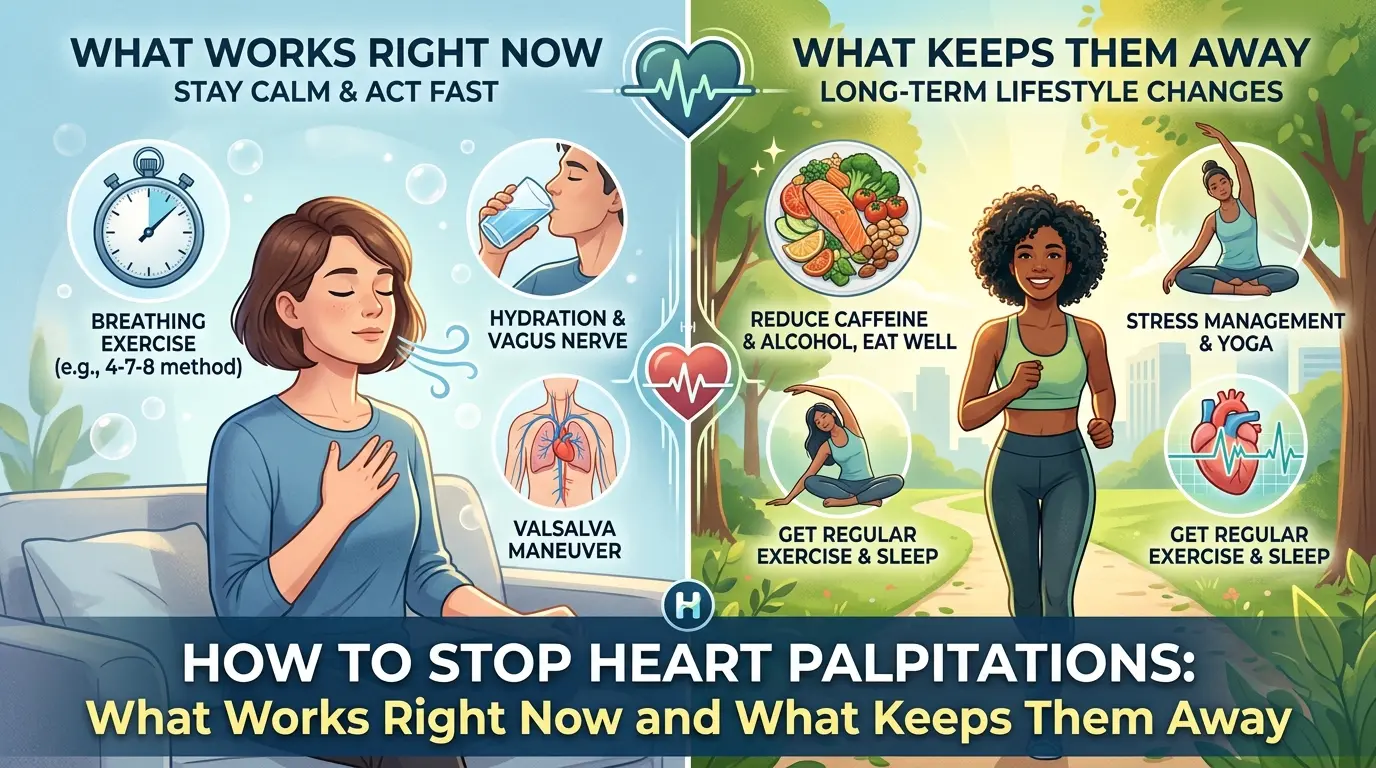
To stop heart palpitations in the moment, sit or lie down, breathe slowly (in for 4 seconds, out for 6 to 8), and splash cold water on your face. If that doesn’t settle things, try a gentle vagal maneuver such as bearing down for 10 to 15 seconds. Then sip some water and cut out caffeine, nicotine and alcohol. Most palpitations pass within a few minutes. If they come with chest pain, fainting or trouble breathing, get emergency help instead.
First, take a breath
Few things feel as strange as your own heart suddenly thumping, fluttering or skipping. Your mind jumps to the worst case in about two seconds, and the panic makes your heart go even faster.
Here’s the reassuring part. According to the Mayo Clinic, palpitations can be worrying but are usually harmless. Only rarely do they point to a real heart rhythm problem. So the goal is simple: calm things down now, then work out what’s setting them off.
What a palpitation actually feels like
People describe it in different ways. Some feel a pounding heart, some a flutter, some a skipped beat or a heart racing for no reason. You can also feel it in your throat or neck, not just your chest.
It’s often your heart doing something ordinary, like an extra beat that arrives early. You just happen to notice it, usually when you’re resting and the room is quiet.
7 ways to stop heart palpitations at home
1. Sit down and slow your breathing
Standing around while your heart pounds can leave you lightheaded, so sit or lie down first. Then slow your breathing on purpose.
A simple pattern is to breathe in through your nose for 4 seconds and out through your mouth for 6 to 8. The longer exhale nudges your body out of fight-or-flight mode, which is why this is the first thing to try. Do it for a few minutes and let your belly expand rather than your chest.
2. Splash cold water on your face
It sounds too easy, but it works for plenty of people. Cold water on your face triggers a reflex that can slow your heart rate. Hold a cold, wet cloth to your face for 20 to 30 seconds, or just splash it a few times.
3. Try a vagal maneuver (carefully)
Your vagus nerve helps control heart rate, and stimulating it can calm a racing heart. The most common version is the Valsalva maneuver. Pinch your nose, close your mouth and bear down gently for 10 to 15 seconds, like you’re straining on the toilet. Don’t force it. Coughing hard can work in a similar way.
If your palpitations feel like a sudden, fast, regular race (often called SVT), the modified version has better odds. In the UK’s REVERT trial, 43% of people who used the modified technique converted back to a normal rhythm, compared with 17% using the standard one. You bear down while sitting back at about 45 degrees, then lie flat and have someone lift your legs for 15 seconds. It was done under medical supervision, so it’s worth asking your doctor to teach it to you before you rely on it.
A few warnings here. Skip these maneuvers if you have chest pain, if you feel faint, or if you have known heart disease and haven’t checked with your doctor. Don’t press on your eyeballs, and don’t massage your neck. Both are old tips that aren’t safe to try on your own.
4. Drink a glass of water
Dehydration makes your heart work harder, and it’s a common and easy-to-fix trigger. Sip a glass of water slowly. Medical News Today also points out that fluids containing caffeine or alcohol can make things worse, so plain water is the safe choice here.
5. Move a little, if you feel okay
Gentle movement like a slow walk can help take your mind off the sensation and settle your rhythm. Only do this if you feel well otherwise. If you feel dizzy or have chest discomfort, stop and sit down.
6. Calm the anxiety loop
This is the one people underestimate. Anxiety causes palpitations, then the palpitations cause more anxiety. Stress sets off the body’s fight-or-flight response, which speeds up your heart. If you suspect that’s your pattern, this guide on stopping palpitations caused by anxiety covers breathing, mindfulness and when treatment helps. Even a short grounding exercise, like naming five things you can see around you, can break the loop.
7. Track what happened just before
Note what you ate, drank and did in the hour before. A quick note on your phone is enough. In a week or two, patterns tend to show up, and that pattern is the most useful thing you can bring to a doctor. Read this post also How Long After Wisdom Teeth Removal Can I Eat?.
What triggers heart palpitations?
Often the exact cause never gets found. But these are the usual suspects:
- Caffeine, including coffee, energy drinks, strong tea and some pre-workout powders
- Nicotine and alcohol
- Stress, panic and poor sleep
- Dehydration or low potassium and magnesium
- Intense exercise
- Some cold and allergy medicines, diet pills and certain prescription drugs
- Recreational stimulants such as cocaine and amphetamines
- Hormonal changes, such as during periods, pregnancy or menopause
- Thyroid problems, fever or anemia
- Heart rhythm conditions like atrial fibrillation or SVT
If you think a medicine is behind it, don’t stop taking it on your own. Talk to your doctor or pharmacist first.
Heart palpitations at night
Lots of people notice their heart only when they lie down. The house is quiet, nothing distracts you, and suddenly every beat is obvious. Some people feel it more when lying on their left side or back.
Late meals, chocolate, alcohol and a stressful day can all play a part. Baptist Health gives a simple example: if chocolate in the evening sets your heart off, have it earlier in the day. Try cutting caffeine after lunch, finishing dinner a couple of hours before bed, and winding down without your phone.
Heart palpitations after eating
Big meals, rich or spicy food, sugary food, high-sodium meals and alcohol are common culprits. Acid reflux and gas can also irritate the area and mimic palpitations. Healthline’s guide to palpitations after eating suggests keeping a food diary, which fits with what I said above. Eat smaller portions, slow down, and don’t lie flat right after a meal.
If you get a racing heart along with hives, swelling or trouble breathing after eating, that could be an allergic reaction and it needs urgent care.
Long-term habits that cut down on palpitations
Stopping one episode is useful. Having fewer of them is better.
- Cut back on stimulants. Try dropping caffeine completely for a few weeks and see what changes. Many people are surprised.
- Sleep properly. Aim for 7 to 9 hours.
- Eat a balanced diet. Fruit, vegetables, nuts and whole grains give you potassium and magnesium naturally. Avoid supplements unless a doctor recommends them.
- Exercise regularly. Walking, swimming or cycling strengthens your heart over time.
- Manage stress. Yoga, meditation, therapy or even a daily walk all count.
- Quit smoking.
When palpitations are not okay
Most of the time you can relax. But get emergency help right away if palpitations come with:
- Chest pain or pressure lasting more than a few minutes
- Fainting or near-fainting
- Severe dizziness
- Shortness of breath
Book a regular appointment if palpitations are frequent, last a long time, keep getting worse, or you already have a heart condition. If you’re not sure, it’s always fine to get checked.
What a doctor will do
Expect questions about your habits, medicines and family history, then probably an ECG. If nothing shows up, they may ask you to wear a Holter monitor for a day or two, or a longer-term event monitor, to catch an episode as it happens. If a rhythm problem is found, treatment can include medicines or a procedure called catheter ablation. Most people never need any of that, and many are simply told how to avoid their triggers.
Conclusion: final thoughts
Heart palpitations are scary, but they’re common and usually harmless. In the moment, slow your breathing, use cold water, sip some water and try a careful vagal maneuver if it’s safe for you. Over the longer term, your best tools are boring ones: less caffeine, better sleep, less stress and regular movement. Keep a short trigger log so you and your doctor can spot the pattern.
And please don’t ignore the warning signs. Chest pain, fainting or breathlessness alongside palpitations is a reason to get help straight away, not wait it out.
What about you? Do your palpitations tend to show up at night, after a meal or during stressful days? Share it in the comments. It may help someone else spot their own trigger.
Frequently asked questions
What is the fastest way to stop heart palpitations?
Sit down, slow your breathing with a long exhale, and splash cold water on your face. If that doesn’t help and you have no warning symptoms, a gentle vagal maneuver can be tried. Many episodes settle within minutes.
How do I calm heart palpitations from anxiety?
Slow breathing, grounding exercises and cutting caffeine are the best starting points. If anxiety is frequent, talk to a doctor or therapist, because treating the anxiety usually reduces the palpitations too.
Can drinking water stop heart palpitations?
It can, if dehydration is the cause. Sip a glass of water slowly. It won’t fix palpitations from other causes, but it’s a harmless first step.
Are heart palpitations dangerous?
Usually not. They’re often caused by stress, caffeine or poor sleep. They become a concern when they come with chest pain, fainting or shortness of breath, or when you have a known heart condition.
Why do I get heart palpitations at night?
You notice them more when it’s quiet and you’re lying still. Late meals, alcohol, caffeine, stress and sleeping position can all contribute. If they’re frequent or disturb your sleep, get them checked.
Can magnesium stop heart palpitations?
Low magnesium or potassium can trigger palpitations in some people, so getting enough from food may help. Check with your doctor before taking supplements.
How long can heart palpitations last?
Often a few seconds to a few minutes. If they last longer than that, keep coming back or you feel unwell, see a doctor.
When should I go to the ER for palpitations?
Go if palpitations come with chest pain, fainting, severe dizziness or trouble breathing.
Disclaimer: This article is for general information and isn’t a substitute for medical advice. If you’re worried about your heart, speak to a qualified doctor.