“See you in six months!” Your dentist says it every time, and you’ve probably wondered: is twice a year actually necessary, or is it just a clever business model? How often should you really get your teeth cleaned at the dentist? The honest answer: it depends on your mouth — but for most people, the standard advice exists for good reasons that go beyond keeping the dentist’s schedule full. Let’s look at what the evidence actually says.
First, the history: the twice-yearly recommendation dates to the 1950s, when Pepsodent ran ads promoting it — not exactly a scientific origin. Modern dentistry has refined this considerably. The current professional consensus: cleaning frequency should be based on individual risk, not a universal calendar. But “it depends” isn’t a satisfying answer when you’re trying to book appointments, so let’s make it concrete.
How Often Should You Get Your Teeth Cleaned at the Dentist?
Every 6 months: the standard for most healthy adults. If your gums are healthy, you don’t build excessive tartar, and you have no ongoing dental issues, twice-yearly cleanings with annual exams remain the sensible default. Professional cleanings remove tartar (hardened plaque) that brushing and flossing physically cannot — no amount of home care substitutes for this. The appointment also includes screening for cavities, gum disease, oral cancer, and other issues. Prevention at this interval is dramatically cheaper than treatment later.
Every 3-4 months: if you have gum disease or high risk. Active periodontal disease, a history of frequent cavities, diabetes (which increases gum disease risk significantly), smoking, dry mouth from medications, or rapid tartar buildup — these warrant more frequent cleanings. Your dentist isn’t upselling; the evidence supports tighter intervals for these conditions. Gum disease is the #1 cause of adult tooth loss, and it’s largely preventable with appropriate cleaning frequency.
Every 12 months: possibly enough for very low-risk patients. Excellent home care, no history of dental problems, healthy gums, low-sugar diet — some dentists will extend healthy patients to annual cleanings. But this should be YOUR DENTIST’s call based on your actual oral health, not your preference for fewer appointments. The American Dental Association emphasizes individualized intervals based on clinical assessment.
What Happens at a Cleaning (and Why It Matters)
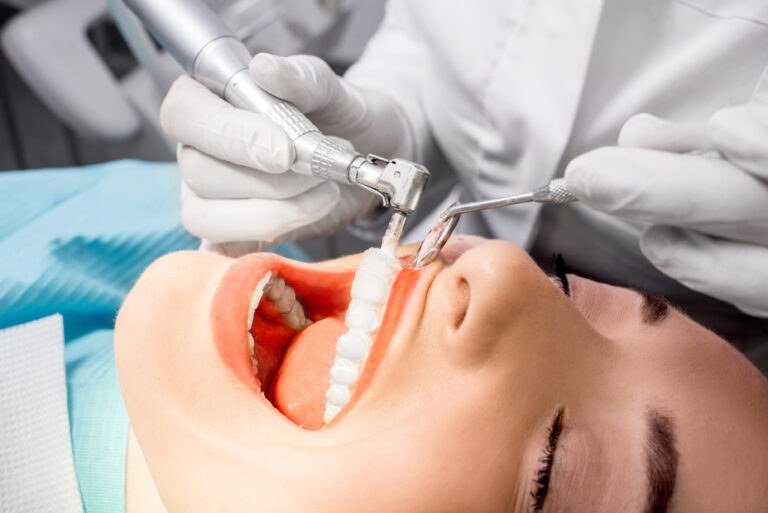
Understanding the appointment demystifies it: examination (checking teeth, gums, and soft tissues — including oral cancer screening, which is quick and potentially life-saving), scaling (removing tartar above and below the gumline with specialized instruments — this is the part you can’t do at home), polishing (removing surface stains and smoothing teeth to slow future buildup), flossing (professional technique demonstration disguised as a service), and review (your dentist discusses findings and next steps).
The value isn’t just clean teeth. Regular cleanings catch problems when they’re small and cheap: a tiny cavity is a $150 filling; an ignored cavity becomes a $1,500 root canal and crown. Gum disease caught early is reversible; advanced periodontitis causes irreversible bone loss and tooth loss. The economics are overwhelmingly in favor of prevention — every dollar spent on preventive dental care saves an estimated $8-$50 in restorative costs.
Making Dental Care Affordable
Cost keeps many people away, but options exist:
- Dental insurance: Most plans cover two cleanings yearly at 100% — if you have it, USE it. Unused preventive benefits don’t roll over; you’re leaving money on the table.
- Dental schools: Supervised students provide cleanings at 30-50% of private practice costs. Appointments take longer, but quality is closely supervised and excellent.
- Community health centers: Federally Qualified Health Centers (find via the HRSA finder) offer sliding-scale dental care. Many have longer waits but dramatically lower costs.
- Cash-pay discounts: Many dentists offer 10-20% discounts for cash payment or in-house membership plans ($200-$400/year covering cleanings, exams, and X-rays plus treatment discounts). Ask — the worst they say is no.
- Don’t skip to save money: Skipping cleanings to save $150 routinely leads to $1,500 problems. It’s the most expensive “saving” in healthcare.
Between cleanings, watch for the early warning signs that warrant an earlier visit: bleeding gums (especially if new or worsening), persistent bad breath, tooth sensitivity to hot or cold, visible changes in gums, or any mouth sore that doesn’t heal within two weeks. These are your mouth’s check-engine lights — ignoring them turns small, cheap problems into large, expensive ones. Most dental emergencies started as minor issues someone noticed but postponed. A quick call to your dentist about a new symptom is always the right move.
It’s also worth understanding what happens when cleanings are skipped for years — because “I’ll go when something hurts” is the most expensive dental strategy that exists. Without regular cleanings, tartar accumulates below the gumline, causing gingivitis (reversible gum inflammation) to progress to periodontitis (irreversible bone loss around teeth). This progression is silent — no pain until it’s advanced. By the time something hurts, you’re often looking at deep cleanings ($800-$1,800), gum surgery, or extractions and implants ($3,000-$5,000 per tooth). Compare that to $150 twice yearly for prevention. The math isn’t close. Additionally, growing research links gum disease to systemic health issues — cardiovascular disease, diabetes complications, and adverse pregnancy outcomes. Your mouth isn’t separate from your body; it’s the gateway. Regular cleanings protect far more than your smile, and the twice-yearly habit is one of the highest-value health investments you can make.
For the broader preventive care picture, our guide to affordable physicals without insurance covers medical checkups on a budget, and our diabetes early signs guide explains the mouth-body connection — gum disease and blood sugar influence each other in both directions, making dental care part of whole-body health.
The Bottom Line
How often should you get your teeth cleaned? Every 6 months for most healthy adults, every 3-4 months if you have gum disease or high-risk factors, possibly annually only if your dentist confirms you’re very low-risk. The interval should be individualized — ask your dentist what YOUR mouth needs, not what the calendar says. Professional cleanings remove what home care can’t, catch problems when they’re cheap, and include oral cancer screening. Make it affordable through insurance, dental schools, community health centers, or cash-pay plans — but don’t skip it. The American Dental Association’s patient resources have more on what to expect. Your teeth are the only ones you’ll ever get; twice-yearly maintenance is the cheapest insurance they have.